

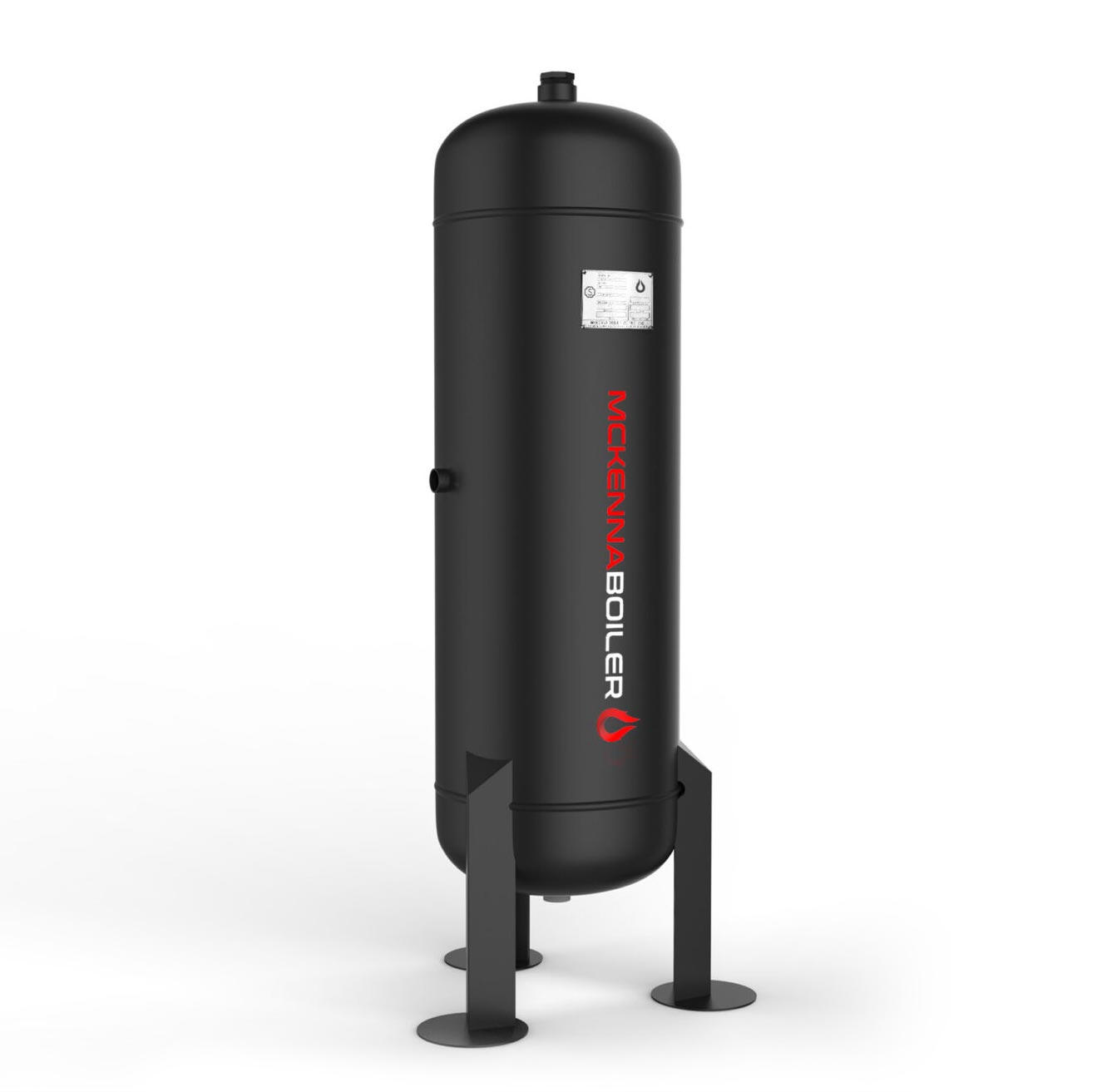
05 May Commercial Boiler Manufacturing: Metals Used For Pressure Vessels
Pressure vessels such as commercial and industrial boilers operate under demanding conditions that require careful engineering, precise fabrication, and the use of materials capable of withstanding high pressures and temperatures over long periods of time. These vessels are critical components in industries ranging from healthcare and food processing to manufacturing and power generation, where they provide steam or hot water necessary for operations. Because of the potential hazards associated with pressurized systems, including catastrophic failure, the selection of metals and welding techniques is governed by strict standards and codes, most notably those established by the American Society of Mechanical Engineers.

One of the most commonly used materials in the construction of commercial boilers is carbon steel. Carbon steel is favored for its strength, durability, and relatively low cost, making it suitable for a wide range of pressure vessel applications. It offers good mechanical properties at moderate temperatures and pressures, which makes it ideal for many commercial heating systems. Grades such as ASTM A516 are specifically designed for pressure vessel use, providing enhanced toughness and resistance to cracking. Carbon steel’s ability to be easily formed and welded also contributes to its widespread use in boiler fabrication.
For applications involving higher temperatures or more corrosive environments, alloy steels are often employed. These steels contain additional elements such as chromium, molybdenum, and nickel, which enhance their strength and resistance to heat and oxidation. Chromium-molybdenum steels, for example, are commonly used in high-pressure and high-temperature boilers because they maintain their mechanical integrity under extreme conditions. The addition of these alloying elements helps prevent creep, a phenomenon where metals slowly deform under prolonged exposure to high stress and temperature.
Stainless steel is another important material used in certain types of boilers and pressure vessels, particularly where corrosion resistance is a priority. Its high chromium content forms a protective oxide layer on the surface, preventing rust and degradation. While stainless steel is more expensive than carbon steel, its longevity and resistance to chemical attack make it a valuable choice in industries such as food processing, pharmaceuticals, and chemical manufacturing. In these environments, maintaining cleanliness and preventing contamination are critical, and stainless steel helps meet those requirements.
In some specialized applications, non-ferrous metals such as copper and nickel alloys may also be used. Copper, for instance, has excellent thermal conductivity, making it useful in heat exchangers and smaller boiler systems. Nickel alloys, on the other hand, offer exceptional resistance to high temperatures and corrosive environments, making them suitable for highly demanding industrial processes. However, due to their cost, these materials are typically reserved for specific components rather than entire pressure vessels.
The pressures that commercial boilers must withstand vary widely depending on their design and application. Low-pressure boilers, often used in heating systems, typically operate at pressures up to 15 pounds per square inch (psi) for steam and slightly higher for hot water systems. High-pressure boilers, which are used in industrial settings and power generation, can operate at pressures ranging from several hundred psi to well over 1,000 psi. In power plants, supercritical boilers may operate at pressures exceeding 3,000 psi, along with extremely high temperatures. These conditions place immense stress on the materials, requiring careful design and rigorous testing to ensure safety and reliability.
The ability of a pressure vessel to withstand these forces is determined not only by the strength of the materials but also by the thickness of the vessel walls and the quality of its construction. Engineers must calculate the stresses that will be imposed on the vessel during operation, including internal pressure, thermal expansion, and external loads. Safety factors are incorporated into the design to account for uncertainties and ensure that the vessel can operate safely under a range of conditions. Regular inspections and maintenance are also essential to detect any signs of wear, corrosion, or fatigue that could compromise the vessel’s integrity.
Welding plays a crucial role in the fabrication of commercial boilers and pressure vessels. Because these structures are typically assembled from multiple pieces of metal, the quality of the welds directly affects their strength and safety. Welding must be performed in accordance with strict procedures to ensure that the joints are as strong as, or stronger than, the base materials. The American Society of Mechanical Engineers provides detailed guidelines for welding processes, materials, and inspection methods used in pressure vessel construction.
One of the most common types of welds used in boiler fabrication is the butt weld. Butt welds are used to join two pieces of metal along a single plane, typically edge to edge. This type of weld is essential for creating the cylindrical shells and heads of pressure vessels. When properly executed, butt welds provide a continuous, strong joint that can withstand high internal pressures. Full penetration welds are often required, meaning that the weld extends through the entire thickness of the material, ensuring maximum strength.
Fillet welds are another important type used in boiler construction. These welds are typically used to join components at right angles, such as attaching supports, brackets, or stiffeners to the main structure. While fillet welds are not usually subjected to the same level of stress as primary pressure-retaining welds, they must still be carefully designed and executed to ensure structural integrity.
Groove welds, which include various configurations such as V-groove, U-groove, and J-groove welds, are also widely used in pressure vessel fabrication. These welds are designed to accommodate thicker materials and ensure proper penetration and fusion. The choice of groove design depends on factors such as material thickness, welding process, and accessibility. Proper preparation of the joint, including cleaning and beveling, is critical to achieving a high-quality weld.
Advanced welding processes are often employed to meet the stringent requirements of boiler fabrication. Shielded metal arc welding (SMAW), gas tungsten arc welding (GTAW), and submerged arc welding (SAW) are among the most commonly used techniques. Each process has its advantages and is selected based on the specific application. For example, GTAW is known for producing high-quality, precise welds and is often used for critical joints, while SAW is efficient for welding thick sections and long seams.
Quality control and inspection are integral to the welding process. Non-destructive testing methods such as radiographic testing (X-ray), ultrasonic testing, and magnetic particle inspection are used to detect defects such as cracks, porosity, or incomplete fusion. These inspections ensure that the welds meet the required standards and that the pressure vessel can operate safely under its intended conditions.
In addition to the mechanical aspects, welding also involves metallurgical considerations. The heat generated during welding can alter the microstructure of the metal, potentially affecting its strength and toughness. To mitigate these effects, preheating and post-weld heat treatment are often employed. Preheating reduces the risk of cracking by minimizing temperature gradients, while post-weld heat treatment relieves residual stresses and restores the material’s properties.
The fabrication of commercial boilers and pressure vessels is a complex process that requires a deep understanding of materials science, engineering principles, and welding techniques. The choice of metals, the ability to withstand high pressures, and the quality of welds all play a critical role in ensuring the safety and performance of these systems. By adhering to established standards and employing skilled craftsmanship, manufacturers can produce pressure vessels that operate reliably under some of the most demanding conditions in modern industry.
Ultimately, the combination of robust materials, precise engineering, and advanced welding practices allows commercial boilers to perform their essential functions safely and efficiently. As industries continue to evolve and demand higher performance, ongoing advancements in materials and fabrication techniques will further enhance the capabilities of pressure vessels, ensuring they remain a cornerstone of industrial infrastructure for years to come.
Sorry, the comment form is closed at this time.